About Me

Hi, I’m Isard Haasakker. For 30 years I have worked in the engine room of SAP programmes: configuring, migrating, testing, fixing. I’ve seen what a signature in the boardroom turns into on the project floor, usually about nine months later.
Why I am moving up to the bridge
Most SAP problems I was hired to fix were decided long before I arrived. Scope nobody tested. Assumptions nobody wrote down. So I am moving upstream, to the one moment where a single experienced person can still change the outcome: before you sign. FIT 4 SAP is new. The experience behind it isn’t.
One critical scenario, 30 days, a working prototype. You get evidence, not optimism: a Scar Log of every gap, a Decision Register of every choice, and a Board Pack that tells the truth. Then I step back.
Where I come from
I started in SAP in the late 1990s and have been independent since April 2000. Along the way I taught myself what the job description never asked for.
Functional: from order to ledger
My home ground is order-to-cash and procure-to-pay (SD and MM). On top of that I taught myself finance and controlling (FI and CO), so I understand where every sales order and purchase order ends up in the books. Next on my list: extended warehouse management (EWM) and production, and how they hand work to each other through Kanban.
Technical: building what I design
I also taught myself the technical side, including Fiori apps, so I can build what I design without waiting for someone else to translate. The gap between the whiteboard and a working system is where most projects lose weeks. I close it myself.
Handling complexity, staying clean core
Where functional meets technical, my tool of choice is BRF+, SAP’s own rules engine. It turns code into configuration. Complex decision logic lives in readable rules, and the business can steer it from a spreadsheet, without waiting for a developer. IT keeps control, and it all runs on tools already included in your S/4HANA licence, on-premise or private cloud. No custom code to own, no extra software to buy.
How I apply my skills for FIT 4 SAP
For more than 20 years I have rented my own SAP systems, to play with in my spare time. Some people collect stamps. I rebuild ERP systems. All that practice means I can take an empty system to a working clean core S/4HANA demo, with the basics of finance and logistics, in about eight hours. So a 30-day proof of concept is realistic, not heroic. Day one gives you a working baseline. The other 29 go to the one scenario that matters to you.
Where I break things first
Inside those rented systems run In-House Secure and Sapura Cosmetics, two of my fictional companies I use to test integration patterns and push standard SAP until it cracks. It is also where I keep learning. When your scenario breaks during a proof of concept, there is a fair chance I have already broken it there, and know whether it can be fixed.
The power of One
Large teams are built to implement. A decision needs something else: one person who sees the whole flow, with nobody to coordinate and nothing to upsell. The economics behind that are on the Read Me page.
How I use AI
I built my first AI prompts because I was drowning in paperwork: meeting notes, test scripts, training guides. Today that habit is how the governance gets done. The Scar Log and Decision Register are written as I configure, not tidied up afterwards. AI handles the boring stuff, so I can focus on what really matters: understanding people and finding solutions that help them.
About my books
Make F.I.T. Your Purpose (2016), the method behind FIT 4 SAP.
SAP SOAP, a series of detective novels: Death by Spreadsheet (2025) and Death by Workaround (2026)
About my company
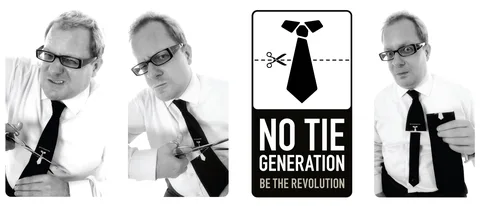
No Tie Generation Limited, Camberley, Surrey. No Tie Generation® and Fast Implementation Track® are registered trademarks in the UK. The name? I cut the tie, not the corners.
Before you sign
If you are about to commit to S/4HANA, the cheapest time to find out where it breaks is now. Start with the White Paper: ten minutes on why testing must come before the Statement of Work. If your scenario sounds like a fit, the questionnaire on the same page tells us both in twenty minutes. And if you would rather talk first, find me on LinkedIn.
Thirty years in the engine room. Now on the bridge, before the ship leaves port.